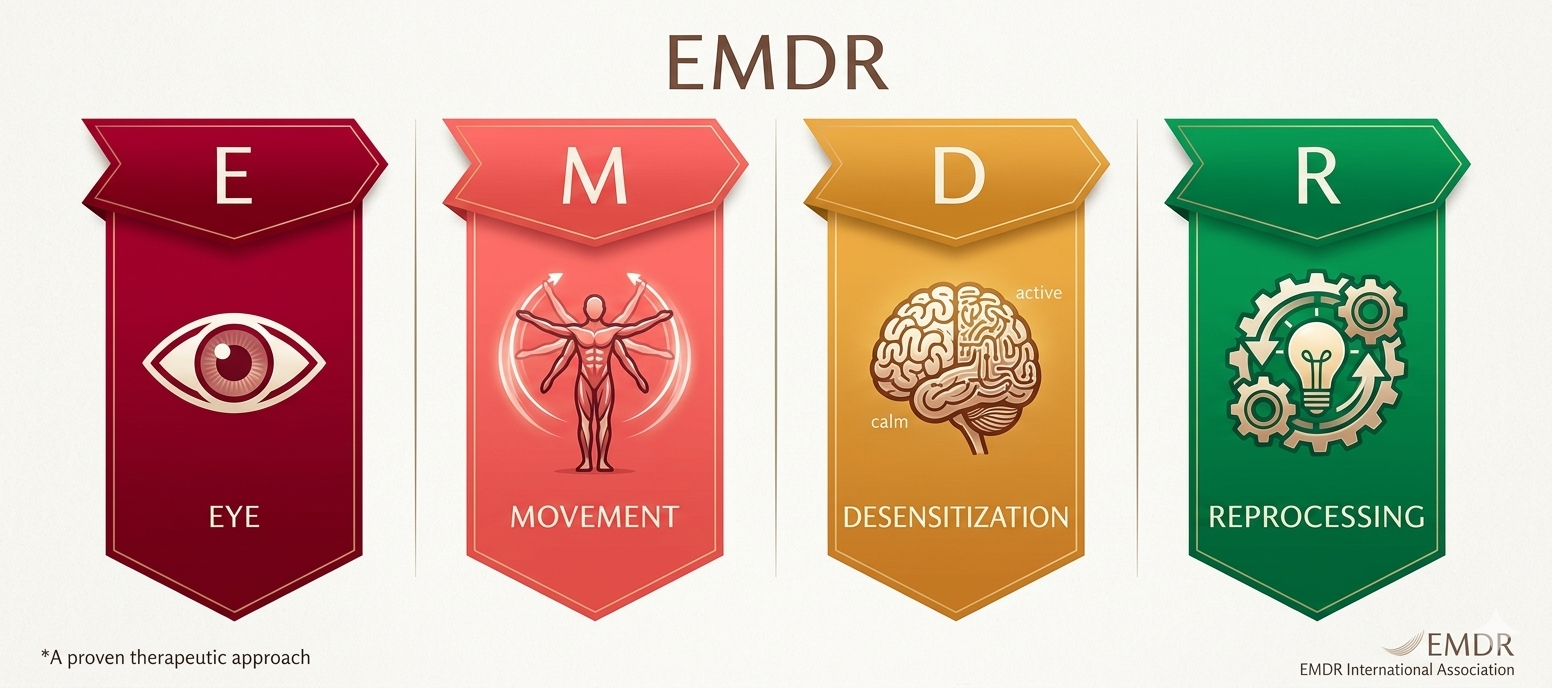
EMDR therapy has become one of the most widely recognized psychotherapy approaches in recent years, particularly in the treatment of trauma and emotionally distressing experiences. Many people encounter the term while searching for support with anxiety, panic attacks, relationship difficulties, or unresolved emotional pain, yet they may still wonder what EMDR actually is and whether it could be suitable for them.
EMDR, which stands for Eye Movement Desensitization and Reprocessing, is a psychotherapy method developed to help individuals process distressing memories and reduce the lasting emotional impact of difficult life experiences. Sometimes overwhelming experiences are not fully processed by the brain at the time they occur. Instead, they may remain emotionally “stuck,” continuing to affect the way a person feels, thinks, and relates to others long after the event itself has passed. These unresolved experiences may contribute to anxiety, emotional overwhelm, low self-esteem, relationship difficulties, chronic stress, or feelings of being constantly on alert.
Although EMDR therapy is often associated with trauma treatment, it is not limited to severe or life-threatening events. Many individuals who seek EMDR therapy have experienced emotionally difficult situations that may not traditionally be described as “traumatic,” yet still continue to influence their emotional wellbeing. Experiences such as emotional neglect, criticism during childhood, rejection, bullying, difficult family dynamics, or painful relationship experiences can leave lasting emotional traces that continue into adult life.
For many people, anxiety is one of the main reasons they begin EMDR therapy. Some individuals notice that they live with a constant sense of tension, worry, or emotional vigilance that feels difficult to control. Others experience panic attacks, intrusive thoughts, or a persistent fear that something bad may happen. In some cases, these emotional responses are connected to unresolved experiences from the past, even when the connection is not immediately obvious. EMDR therapy aims to help individuals process these experiences in a way that reduces their emotional intensity and allows the nervous system to feel safer and more regulated.
Relationship difficulties are another area in which EMDR therapy can be particularly helpful. Many people find themselves repeating similar emotional patterns in relationships, such as fear of abandonment, jealousy, difficulty trusting others, or feeling emotionally overwhelmed during conflict. Often these reactions are not only connected to the present relationship itself, but also to earlier relational experiences that shaped the individual’s emotional world. EMDR therapy can help people explore and process the emotional roots of these reactions, supporting healthier and more stable relational experiences over time.
EMDR is also widely used in the treatment of post-traumatic stress symptoms following experiences such as accidents, natural disasters, loss, abuse, medical trauma, or sudden life changes. Individuals who struggle with recurring memories, nightmares, emotional numbness, hypervigilance, or strong emotional reactions connected to past experiences may benefit from trauma-focused therapeutic work. One of the goals of EMDR therapy is not to erase memories, but to reduce the emotional distress attached to them so that they no longer feel as overwhelming in daily life.
At the same time, EMDR therapy is not a one-size-fits-all approach. Every individual has different emotional needs, coping capacities, and life experiences. In some situations, therapy may first focus on creating emotional safety, strengthening emotional regulation skills, and building stability before trauma processing begins. For this reason, an initial clinical assessment is an important part of the therapeutic process. A qualified therapist will consider whether EMDR is appropriate at that stage of treatment and how the process can be tailored to the individual’s needs.
Many people are surprised to discover that EMDR therapy involves far more than eye movements alone. The therapeutic process includes understanding the client’s history, identifying emotionally significant experiences, developing emotional resources and coping strategies, and gradually processing difficult memories within a safe therapeutic relationship. The pace and depth of the work depend entirely on the individual and their readiness.
Past experiences can continue to shape emotions, relationships, self-esteem, and the body in ways that are not always immediately visible. EMDR therapy offers a structured and evidence-based approach to working with these experiences, helping individuals feel less emotionally burdened by the past and more connected to the present. For those who feel that unresolved emotional experiences, anxiety, trauma-related symptoms, or recurring relational difficulties are affecting their daily lives, seeking professional support may be an important step toward healing and psychological wellbeing.